Word Collect - Word Games Fun
- 4.7
- Rating
- 10.00M
- Installs
- Free
- Price
 Analysis by App-foxy
I found Word Collect - Word Games Fun easy to understand within a few minutes, but not so shallow that it became disposable after the first session. It is a free word game from Super Free, built around the familiar pleasure of spotting words from a limited group of letters. The basic idea is approachable enough for a quick break, while the growing challenge gives it a useful place in a daily puzzle routine.
My first impression was that this is less about racing other players and more about creating a calm, repeatable brain-training habit. You can pick it up when you have a few spare minutes, solve a handful of puzzles, and stop without needing to commit to a long campaign. That makes it a natural fit for a commute, a coffee break, or the moment when you want something more engaging than scrolling.
The game has attracted a large audience, with over ten million installs and a 4.7 average from around 590 thousand ratings. Those figures suggest that its simple word-building format has broad appeal. Still, popularity does not make every puzzle game suitable for everyone, so I paid attention to how it feels for a new player, where the friction appears, and what kind of user is likely to keep returning.
You May Also Like

 AccuWeather: Weather Radar
AccuWeather Review: A Quick, Clear Forecast for Everyday Decisions
For everyday plans, the best forecast is the one you can understand quickly. AccuWeather makes rain timing, radar, and local conditions easy to act on, with a few trade-offs.

 Hill Climb Racing
Why Hill Climb Racing Still Turns Crashes Into One More Run
A tiny car, a bumpy hill and one more upgrade: Hill Climb Racing keeps resurfacing because its simple chaos makes every near-miss feel personal.

 AliExpress - Shopping App
AliExpress Makes Global Shopping Feel Personal, but Shoppers Bear the Risk
AliExpress turns a global marketplace into a pocket-sized discovery engine. Its reach is useful, its shopping loop compelling, and its trade-offs easy to miss.

 Lords Mobile: Kingdom Wars
Lords Mobile Is a Kingdom-Building Routine, Not a Quick Match
A case-by-case verdict on the building, battles, device demands, and social commitments that make Lords Mobile rewarding for some players and exhausting for others.

 PDF Scanner app - TapScanner
TapScanner Makes Paperwork Easier to Capture, Check, and Share
TapScanner makes scanning with a phone feel less like a rescue operation and more like a dependable step in getting work done. Its capture tools are useful, though not flawless.

 Block Blast!
 Shows How Much a Puzzle Game Can Leave Out
A quiet grid game shows why puzzle players increasingly value instant clarity, repeatable skill and low-pressure play—and where the genre still needs to catch up.
More From Our News Desk
View All News


Getting comfortable with the word-building format
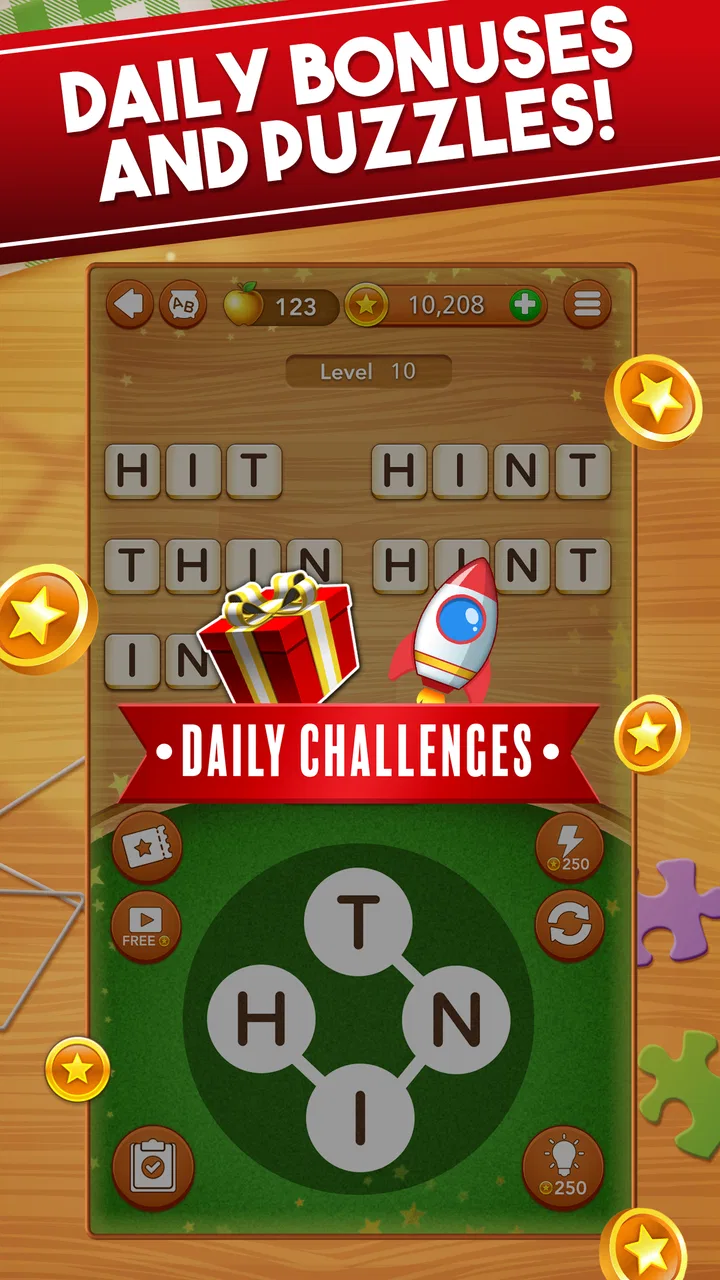
The central activity is straightforward: letters are presented, and I use them to form words. Correct answers move the puzzle forward, while the satisfaction comes from finding words that were not immediately obvious. The design encourages experimentation because a short, ordinary word can be just as useful as a longer one if it fits the puzzle.
That structure gives the game a nice rhythm. I can begin with the most obvious combinations, then look for less visible possibilities by changing the order of the letters or considering familiar word endings. It rewards attention more than speed. If you enjoy crosswords but do not always want clues or a large grid, this compact approach may feel more accessible.
At the same time, this is not a full language-learning course. I would not install it expecting definitions, pronunciation practice, or a carefully structured vocabulary lesson. Its value is in recognition, recall, and flexible thinking. It can make you more alert to word patterns, but it does not replace a dictionary or a dedicated learning app.
The Everyone age rating also matches the approachable nature of the concept. I would be comfortable recommending it as a casual family-friendly word game, although younger players may still need help with unfamiliar vocabulary. A child who is just developing reading confidence may enjoy the letter play, while a beginner reader could find some answers frustrating when the game expects words they have not encountered before.
What the first session feels like
When I start a puzzle, I do not need to learn a complicated control scheme. The important action is immediately visible: work with the available letters and try to complete the word challenge. That low barrier is one of the strongest parts of the experience because the first meaningful success can arrive quickly. You are not spending the opening minutes navigating menus or learning a character system before the game becomes enjoyable.
For a first-time user, I suggest resisting the urge to search randomly for every possible combination. Begin with the longest or most familiar word you can see, then use the remaining letters as prompts. If that stalls, switch to common short words and prefixes. This approach is more reliable than repeatedly tapping without a plan, and it helps you notice how the puzzle is constructed.
A useful habit is to treat each solved word as a clue about the game’s vocabulary expectations. If the puzzle accepts a word you considered ordinary, that tells you not to overthink the next answer. If a familiar-looking combination does not work, try changing the order or checking whether you have used the exact letters available. That small adjustment prevents the common mistake of assuming the game has rejected a valid idea when the real issue is letter selection.
I also found that a short pause can be productive. When I stare at the same letters for too long, everything starts to look the same. Looking away briefly and returning with a fresh view often makes a hidden combination easier to see. This is a simple technique, but it matters in a game where the challenge comes from perception as much as vocabulary.
How to turn the first win into a useful routine
After completing an early puzzle, the best next step is not necessarily to play for as long as possible. I prefer using the game in small sessions, because the letter-search mechanic works well as a mental reset. A few rounds can fill an idle moment without turning the activity into a chore.
One realistic use case is a delayed appointment. Instead of opening a social feed and losing track of time, I can play a couple of word puzzles, stop at a natural point, and return to whatever I was doing. The game suits that situation because progress is divided into manageable challenges rather than one uninterrupted task.
It can also work as a gentle warm-up before writing or studying. I would not claim that a few puzzles automatically improve academic performance, but searching for patterns can help me shift from passive attention into active thinking. The benefit is mainly practical: it gives the mind something focused to do for a short period.
For players who like tracking personal improvement, I recommend noticing your solving process rather than only your completion rate. Ask yourself whether you are spotting common endings faster, using fewer guesses, or recovering more quickly after getting stuck. Those observations make the game feel more rewarding than simply clearing one puzzle after another.
Where new players commonly get confused
The biggest source of confusion is the difference between a word that seems valid in everyday conversation and a word the puzzle is looking for. Word games often use a defined answer set, so a perfectly understandable term may not be accepted, while another less familiar word may be required. I try not to interpret that as a personal vocabulary failure. It is usually a reminder that the game follows its own word selection.
Another easy mistake is assuming that only long words matter. Longer answers are satisfying, but short words can help reveal the structure of the puzzle and may be necessary for completion. I recommend clearing the obvious small combinations instead of ignoring them. They can act as stepping stones when the main answer is not yet visible.
Players can also become too focused on one arrangement of letters. If your first attempt fails, do not keep repeating the same pattern. Move the starting letter, test a different ending, and consider whether a familiar word has a related form. The game becomes less frustrating once you treat each failed attempt as information rather than wasted effort.
Hints and other assistance can be tempting when a puzzle refuses to open up. I would save them for genuine dead ends, not use them immediately whenever an answer takes more than a few seconds. Solving the difficult part yourself is where much of the satisfaction comes from. If you use help too early, the game can turn into a sequence of prompts rather than a word challenge.
Free access, purchases, and the practical trade-off
The game is free to download, which makes it easy to try without an upfront commitment. It includes in-app purchases ranging from $0.99 to $499.99 per item, so I would advise checking the purchase flow carefully before handing the phone to a child or allowing casual tapping around optional extras. The existence of a free entry point is convenient, but free does not mean every part of the experience is without a possible cost.
This matters especially for users who want a completely controlled, no-purchase environment. If your priority is a word game with no temptation to spend, a paid alternative or a very minimal puzzle app may suit you better. On the other hand, someone who simply wants to sample the basic gameplay can start without paying and decide later whether the available extras are worthwhile.
I also would not choose this game as my first option if I wanted a highly competitive multiplayer experience, a serious tournament ladder, or detailed language instruction. Its strength is the individual puzzle loop. Compared with a crossword app, it feels more compact and less clue-driven. Compared with a spelling-learning tool, it is more playful and less educationally structured. Compared with a timed anagram game, it is better for relaxed solving if you prefer not to feel rushed.
Who is likely to enjoy it most
I think it is particularly suitable for casual players who like word puzzles but want a simple starting point. It is also a good match for people who enjoy collecting small successes throughout the day. The format does not demand a large time investment, and the basic action is easy to explain to someone who has never played a mobile word game.
It may appeal to adults who want a light mental activity during breaks, families looking for an accessible puzzle, and experienced word-game players who enjoy switching between longer sessions and quick challenges. The broad audience is reflected in its strong reception, with around 126 thousand written reviews alongside its large rating count.
I would be more cautious about recommending it to someone who becomes irritated by unfamiliar answers or who needs every puzzle to teach a clearly defined skill. I would also point heavy crossword fans toward a more clue-rich alternative if they enjoy solving through definitions, themes, and interconnected grids rather than rearranging letters in a compact format.
Device details and what to check before installing
The current version is 2.029, and it requires Android 7.0 or later. That makes the compatibility question fairly simple for most Android users: check the operating system version before downloading, particularly if the phone is older or has not been updated for some time.
Super Free has kept the product focused on the word-game category rather than turning it into a broad collection of unrelated activities. I appreciate that focus because the purpose is clear from the first session. You install it for letter puzzles, not for a complicated virtual world or a long list of systems that need explanation.
Before settling into regular play, I would also take a moment to review the purchase settings on the device. This is not a criticism of the core puzzle idea; it is simply sensible housekeeping for any free game with optional items. Once that is handled, the experience is easier to judge on its actual merits: how much you enjoy finding words and whether the progression keeps you interested.
My recommendation after spending time with it
My favorite quality is the low effort required to reach a satisfying moment. I can open the game, understand the task, and begin testing ideas almost immediately. That makes it more dependable for short breaks than word games that require a long setup or a complicated board.
The main limitation is that the experience depends heavily on whether the accepted vocabulary feels fair to you. When the answer set matches your expectations, the puzzles are pleasantly absorbing. When it does not, the game can feel arbitrary unless you are willing to experiment and move on from a rejected guess. The purchase range is another reason to approach the free model thoughtfully rather than tapping through every option without checking.
If you want a friendly, compact word game for casual brain exercise, I would recommend giving Word Collect - Word Games Fun a try. Start with a few puzzles, use the obvious words first, save assistance for real obstacles, and pay attention to how the game’s vocabulary behaves. That path gives a first-time player the fairest impression of its strengths.
I would skip it in favor of a crossword, spelling tutor, or competitive anagram game if those specific formats matter more to you than relaxed letter discovery. For everyone else, this is a solid free entry into mobile word puzzles: easy to begin, flexible enough for everyday use, and most enjoyable when you treat each puzzle as a small exercise in noticing patterns rather than a test you must rush to pass.
FAQs for Word Collect - Word Games Fun
01What is Word Collect - Word Games Fun?
Word Collect - Word Games Fun is a mobile puzzle game designed to challenge your vocabulary skills. It offers a variety of word puzzles that range from easy to difficult, making it suitable for players of all ages. The game aims to improve your word knowledge while providing an entertaining experience.
02Is Word Collect free to play?
Yes, Word Collect - Word Games Fun is free to download and play on both Android and iOS devices. However, the game does offer in-app purchases that can enhance your gameplay experience, such as additional hints or ad-free play. These purchases are optional and not necessary to enjoy the game.
03Does Word Collect require an internet connection?
No, Word Collect - Word Games Fun can be played offline, allowing you to enjoy the game anytime and anywhere without needing an internet connection. However, some features, such as in-app purchases or leaderboard updates, will require connectivity.
04What are the key features of Word Collect?
Word Collect offers several attractive features, including a wide range of levels, daily challenges, and the ability to collect bonuses as you progress. The game also provides hints for difficult puzzles, ensuring you never get stuck for too long. Its user-friendly interface makes navigation simple and enjoyable.
05How does Word Collect enhance vocabulary skills?
Word Collect - Word Games Fun enhances vocabulary skills by challenging players to form words from a set of letters. As you progress through the levels, the difficulty increases, requiring more complex word formation and strategic thinking. This gameplay encourages learning new words and improving spelling and cognitive abilities.
Pros
- Engaging puzzles enhance vocabulary.
- User-friendly interface for easy navigation.
- Daily challenges keep gameplay fresh.
- Offline mode available for on-the-go play.
- Regular updates with new levels.
Cons
- In-app ads can disrupt gameplay.
- Limited free hints available.
- Progress tied to in-app purchases.
- Some levels feel repetitive.
- Requires internet for certain features.

Word Collect - Word Games Fun
Gallery